Home Blog Page 155

How To Build A Production Crew Around Your Comedy

There has never been a better time for comedy production. From studio films and Netflix specials to bootstrapped web series and Facebook video ads, comedy video today comes in many different shapes and sizes. But that also means there isn’t a clear blueprint to follow if you want to create your own content — it feels a little bit like the wild west, where a quirky five-second video shot with a smartphone can get just as much attention as a scripted and professionally produced commercial. So where to begin?

We sat down with Joe Whelski, New York City-based director, writer, producer, actor and a Creative Director at the Magnet Video Lab (the sketch video collective for the Magnet Theater, an improv comedy theater and school located in NYC’s Chelsea neighborhood), to talk about success in comedy video production. Joe has done it all in comedy — written, directed and produced films and national commercials, acted on TV, starred in stage productions and more — so he’s seen it all, too. It turns out that producing comedy video isn’t all that hard, as long as you have a few key components.

Find Yourself First

First and foremost, you need to understand yourself in order to build a great production crew. “Do some homework to find out what type of comedy you gravitate to,” Joe told me. “Do you like variety sketches like Saturday Night live? Traditional sitcoms like The Big Bang Theory? Whatever your preference, figure out what style or styles of comedy makes you feel at home.” This is important because different styles of comedy sometimes have different technical requirements and might call for specific crew members. For example, a mockumentary-style show like The Office might call for more nuanced camera angles and a more experienced DP whereas a variety-style show like Saturday Night Live might depend more on bigger than life character work and a cast that can deliver.

Next, ascertain your skill set. Are you better in front of the camera or behind it? Get comfortable with what you can do yourself and what you need help with, and be honest about it. “For example, if you’re a technical person and don’t have experience with comedy writing or performing, you may want to connect with people in that world to get an idea or maybe even a script,” explained Joe. “Don’t try to be everything all at once — it can be daunting. Instead, try to involve as many quality team members as you can. I would only keep my team small if I’m confident I can fill each role. Otherwise, get help…you can always find someone.”

So where to start when you’re ready to get a production crew together?

Find The Right Crew

Aside from being a Creative Director at the Magnet Video Lab, Joe also teaches a class at the Magnet Theater called “Video Creation Level 1” in which he trains students on the fundamentals of creating and producing a comedy sketch video. “The easiest way to get a good production crew is, well, to know people,” Joe told me. But if you’re not an industry veteran, where do you start? “We have people come to shows at the Magnet Theater who end up approaching performers they liked to ask them if they’d be willing to collaborate on a video.”

An improv theater or other comedy venue can be a great place to start. “If you’re in a city with comedy theaters like NYC, LA, or Chicago, it’s actually pretty easy,” Joe remarked. “Comedy actors often also write and work on video productions themselves and can be open to collaborating. If not, there are online resources such as Mandy.com where you can find crew members regardless of where you live.” If you have an audience on social media, YouTube, a blog or otherwise, try reaching out to them, too. If they follow you, they’re all the more willing to collaborate on a project or at least connect you to someone who’s interested. And of course there’s friends and family — you never know whose cousin is studying film or taking an improv class and is looking for some hands-on experience.

Sound is crucial in comedy video — your audience needs to hear the jokes! It’s worth hiring a good sound operator for you production.

That doesn’t, however, mean you should hire just anyone. Being strategic about where you allocate your resources can be the difference between good and great. Joe very adamantly addressed this point. “When creating a comedy video, content is king, but your audience needs to be able to hear it. They will probably forgive a lower production value, especially if the content is funny, but they won’t forgive poor sound quality. Nail the script, the performance and the sound and you nail the comedy.” Make sure your crew reflects this. If you’re the writer, hire a quality sound person, and vice versa. Try to stick to one role — otherwise you could spread yourself too thin — and hire the rest.

Keep Your Crew Together

The hardest part of building a comedy production crew, especially in the beginning, is actually just keeping it together and finishing your project. Admittedly it’s tough to keep your crew intact for a longer shoot, especially if it’s low budget, since that often translates to low commitment. But while every shoot has its own set of challenges, Joe noted three best practices when it comes to keeping your crew together.

Offer value. “Money is the best way to compensate a crew member, but it’s not the only way,” remarked Joe. “For example, an IMDB credit can work. Or, if you’re experienced or well-connected, your willingness to share your knowledge or connections with your crew could be enough, especially for someone early in their career. There’s also revenue sharing, though as a fledgling producer that’s not too compelling since making money off comedy videos is not an easy task.” Ultimately, says Joe, even if you’re on a tight budget, “try to pay your crew something. A bit of cash and a great lunch can go a long way in terms of commitment and quality.”

Be Honest. Joe stressed that “being upfront about roles, responsibilities and expectations is crucial in avoiding confusion down the line.” Make sure your crew members feel good about their roles and are clear about the value they’re getting out of the project.

Finish what you start. According to Joe, “people who don’t finish their projects lose professional momentum. They lose trust and weaken their network, which makes it harder to get a good crew in the future.”

Closing Remarks

Joe’s most practical advice to his students is to keep their comedy videos short — two minutes max. “No one wants to be the 10-minute-comedy-video person, especially as they’re starting out,” Joe mused with a smirk. “It sounds silly, but keeping it short and sweet is the best way to get started.”

“And make sure to support your network,” Joe added. “Go to film festivals when your friends are debuting a short, share and donate to their Kickstarter campaigns or Patreon pages and otherwise give your time where you can. You’ll strengthen your audience and build good karma along the way.”

Get YouTuber.

What YouTube Creators Can Learn from Art Tutorials (and 5 of our Favorites)

Learning a skill in today’s culture is as easy as staying inside and going online. When creating tutorials for YouTube, check out these five art channels that have struck a chord with their how-to videos.

Searching for how-to videos on YouTube is like going down the rabbit hole. There’s a never-ending stream of videos that can teach anyone to do anything. Everyone has a desire to learn, and with content easily accessible with one click, there is no excuse for failing to pursue your interests. YouTube has lowered the barriers to learning a new skill.

The five channels featured here are just a few of the many from which you can learn a thing or two. These channels serve as examples of the different ways you can teach basic artistic techniques. They stand out by offering clear and easy to follow instruction to bring out viewers’ creative side.

Circle Line Art School was created by Tom McPherson, an artist and freelance teacher. His channel is one of the better tutorial channels for learning how to draw. Some videos have him talking while teaching the basics as he draws, while others simply show the process between sketch and finished drawing, letting you learn by observation.

When first entering Tom’s channel, it may feel overwhelming; there are so many videos. He shows, in detail, how to draw everything from faces, to animals, to perspective drawing to famous buildings. As you dive in, however, you’ll find that his videos are well put together and well-organized, with links to related playlists in the descriptions of most videos to make it easy to progress through a concept.

Emmy Kalia teaches subscribers how to draw with color pencils and her videos may be the way to go for those just beginning in the medium. Her channel is especially helpful because not only does she give very detailed videos on how to draw; Emmy also gives you materials lists for each of her videos with Amazon affiliate links that make it easy for you to find materials while at the same time earning her some extra revenue.

For those who are going down this YouTube road and doing your own art tutorial, having links to materials is a nice touch, and with affiliate links, they can also be a good source of passive income for your channel.

Painting with Jane, as the name suggests, is a tutorial video channel that aims to teach you how to paint. Watching Jane in her art zone is enough to subscribe. She’s fun, and her art is breathtaking.

Before every video, she tells you what you need, which is helpful, and every video has a list of materials and colors she uses along with tons of information about how to support the channel and where to find her elsewhere on the web. She leaves affiliate links out of the video descriptions, but you will find them on her website, where she also sells channel swag and original paintings.

Jane also seeks support from her fans to keep her channel running. In addition to support through Patreon, Painting with Jane also receives revenue from YouTube’s new Sponsorship program, of which Jane is a beta tester.

The Art Sherpa is a fun channel for artists of all levels hosted by Cinnamon Cooney. Whether you are a beginner or advanced in your artistic skills, this channel is for you. Along with more than 600 acrylic painting video tutorials organized into playlists by theme or experience level, the Art Sherpa hosts live streaming painting sessions, where you can dive straight into learning alongside other new artists around the world. She’s made it easy to keep up with each lesson with detailed descriptions and affiliate links to paints and other materials. Her website also features neat extras like traceable drawing to help jump-start your painting projects. This channel is devoted to helping people develop their skills and learn to love painting.

Ahmed Aldoori is a concept artist, illustrator, teacher and YouTuber all rolled into one. From his videos, it is clear that teaching is a gift because he knows how to engage and encourage his students and followers. His lessons begin when he opens up Photoshop and you shows exactly where to go and what kind of brushes to use. He speaks clearly enough that you can easily follow what he is doing, and he borrows instructional techniques from college design classes.

Ahmed’s channel focuses on Photoshop painting with an emphasis in concept art — which makes sense since he’s worked on major video game releases including Guild Wars 2. In addition to technical instruction in using the program, he also gives lessons on how to study a photo, what goes on inside an image and how to use colors. His channel is enlightening and worth a look if you are looking to dive further into art.

With easy-to-follow instructions and smart choices when it comes to video techniques, these five channels all strive to make art and creativity accessible with just one click of the mouse.

A person looking to better themselves in the art of creating — or just to learn the necessary tools — can do so in the comfort of their home. And if you’re setting out to make your own tutorials, consider how you can organize your videos to make learning easier. Add extra information whenever possible. The more valuable and easy to access your lessons are, the more likely it is that you’ll receive the support of your audience in return. Use your skills to teach others to be bold in their creativity; it is an excellent feeling to inspire others.

Get YouTuber.

Do I Need a Publicist for My YouTube Channel?

Friends and family have told you that your channel is great, but now you just need more people to notice it. Are you’re wondering how to get publicity for your videos, your channel or your next creative endeavor? Do you think a publicist might help?

While increasing views and subscriptions are a top priority for many YouTubers, publicity for your brand is even more important. Of course that brings up the question: is your channel the brand, or are you (the creator) the brand? Your answer to this question will probably affect your end goals as well as your PR strategy.

I’m the Brand

Typically, it’s challenging to generate PR for yourself because, in this case, your goal really isn’t to increase views for a specific video. While your prior work is something you can cite in your press materials, here, you are trying to stand out from the noise to promote, for example, a Kickstarter campaign for your next new project, a new blog or website that you’re launching, or your work at a high profile film festival. In some cases, great PR can be used to attract an agent, investors, sponsorships or even a larger distribution deal.

My Channel is the Brand

Since no one knows your work better than you, in this case, you can really generate a lot of press yourself if you’re willing to put out the effort. Your PR campaign might be focused on getting more views on your channel, or it might be to get funding for the second season of your web series. It doesn’t matter if your work is a web series, a video game app or a feature film; what’s important is that your primary focus remains on that specific work so as to not dilute your message.

What Does a Publicist Do?

A publicist will discuss your goals and create a PR strategy designed to achieve that plan. Your PR campaign may include press releases, interviews, parties, speaking engagements and public appearances. A good publicist doesn’t need to cost a lot of money or have a lot of experience. In fact, a community college marketing major will definitely be cheaper and possibly more effective than a 10 year pro. Why? At the end of the day, it comes down to connections. Most publicists can write a press release, but can they get you a speaking spot on a panel at San Diego Comic Con? Can they organize a party for you with celebrities and industry heavyweights in attendance at SXSW? Do they have connections with the local TV station to get you an interview on the morning news show? A good publicist can access the right people and connections at the right time to maximize your press opportunities.

The key to making these messages effective is to say something relevant and appealing to your audience.

PR Firms vs Ad Agencies

Both of these options are expensive, but either could be a good fit if you have deep pockets. A PR firm is composed of many publicists. Typically, you would have one publicist assigned to you; however, if you had a film at SXSW, the firm might send a team consisting of multiple publicists to manage everything from Q and As at your screenings, to red carpets, to that party we previously discussed. An ad agency creates advertising such as commercials, billboards and magazine ads to your specifications. Once you approve their final work, they will place your ads in such a way as to generate the most exposure or buzz about your work.

Can I Do the Work?

In many cases, you can generate a lot of press through social media. It can be a post on Facebook, Instagram, Twitter or your own blog; however, the key to making these messages effective is to say something that is relevant and appealing to your audience. If you’re doing a docu-series on lethal force, don’t tweet how great your series is; instead, send topical messages related to this issue such as sharing a quick statistic you read in a New York Times article; in this case you might to include a link to that article as well as one to your own work. Remember, press is only effective if you can get your audience to see it AND consume it.

SEOs, @s and #s

If you’re not already using search engine optimization strategies for your videos, you should start today! SEOs are one of the easiest ways to increase your views. Effectively using mentions and hashtags in social media can also lead viewers back to you and your video work. If you don’t know how to do these things, then you definitely need a publicist ASAP who is savvy with social media.

Other Ways to Gain Exposure

I have a friend who takes a photo with every celebrity he happens to meet. He drives his PR with this through effective use of SEOs and hashtags with these photos on Instagram. Another, collects business cards of everyone she meets and follows through with every contact, which is very important if you’re trying to build a potential mail list. Pairing with a multi-channel network (MCN) might be another option for attracting viewers to your YouTube channel. If you really know your audience, it will be much easier to find ways to connect with them.

Final Thoughts

You’ll need to think outside the box when crafting an effective PR campaign; this is especially true if you’re doing it yourself. If you do decide to hire a publicist, or your roommate who happens to be a marketing major in college, let them do what they do best. Give them all the information they need and let them run with it. If you trust them enough to give them the job, don’t micromanage. Your time will be better spent on your next creative endeavor.

Get YouTuber.

How to Make Money Selling Your Craft

The beauty of YouTube is that it can be a wonderful marketing platform for your art.

by Teighlor Johnson and Weland Bourne

Many YouTubers make videos about their art or crafts because they are passionate about their work and want to share it with the world. But if you’re making how-to videos, why aren’t you also selling your projects online? Chances are, most people who watch your videos would rather custom order that special item from you than try to make it themselves. Wouldn’t you rather order a product that was made by a YouTube expert?

Most crafters will have heard of Etsy, but Storenvy and Amazon Handmade are becoming increasingly popular alternatives.

What to Sell

There’s a good chance you already know what to sell based on your YouTube analytics. But if you’re new to this, talk to your family and friends. What items do you make that they really love? Think about all of those items you’ve made for holidays like birthdays, Halloween, Thanksgiving and Christmas; seasonal items can be big sellers!

Selling your work may seem daunting, but it’s easier than you think. There are many websites out there that specialize in selling your unique, handmade items. Some of these sites cater to a specific craft while others have regulations on what is considered handmade. For example, if you create a design for a t-shirt and you silkscreen this design on a bunch of shirts, some sites will consider this mass producing an item, meaning the item isn’t handmade. However, if you embroider the same design on multiple shirts, this is perfectly acceptable for handmade-only sites.

Sites like Teepublic and Spoonflower focus on clothing and textiles and can be a good outlet for your artwork and designs.

Where to Sell

Etsy is probably the most well known site for handmade crafts; however, it has become over-saturated with similar products. Additionally, it is beginning to be overrun by resellers and wholesale marketers. Because of this, many artists are migrating their work over to Storenvy. Amazon Handmade is a also a great site because, as a seller, you can really benefit from their search feature, which can help guide customers to your work. For Amazon Handmade, you must be approved in order to sell there, and their focus is on handmade items as opposed to resellers. On all of these sites, if you make it, you can sell it. Items can range from jewelry to pottery to knives and swords to costumes to paintings to wedding gowns and even furniture.

Other sites have a specific focus. For example, Artcra focuses on American crafters while Teepublic, threadless, and Spoonflower focus on clothing and textile designs for people to purchase as clothing, fabric, wallpaper and even gift wrap. Roostery is an affiliate of Spoonflower where customers are able to select a design and then choose an item like a tablecloth or pillow for it to be placed on. Redbubble will print your designs, allowing customers to purchase your artwork as a print or have your work printed on items such as mugs, tote bags and calendars. You can even sell your game mods on Steam. And, Amazon even has a special program designed to let you sell services such as assembling a bookcase, installing a home entertainment center or photographing their wedding.

Corter Leather showcases their crafting prowess on YouTube, then directs viewers to a webstore where they can purchase the results.

All of the virtual shopping malls vary in their charges for listing fees, transaction fees and credit card processing fees. While most sites have cheap listing fees, the transaction and credit card fees do vary, so you will probably want to compare these fees when choosing your site. Some artists will list items on multiple sites for exposure and then redirect customers to their own websites. This can be a good strategy. Others use graphic cards before and/or after their YouTube videos for advertising. Facebook and Instagram can also be good social media sites for garnering attention for your products.

DIY Selling

Many artists and crafters choose to set up their own webstores. Companies like Squarespace and Wix make creating your own storefront simple by providing easy to use templates. These virtual stores come complete with a shopping cart system and credit card processing. With your own virtual store, you are only paying for your web-hosted storefront and your credit card processing fees. Many virtual storefronts use Square and will allow you to purchase a Square Reader at a relatively low cost. With a Square Reader, you can accept credit cards for physical purchases should you decide to sell your art or crafts at genre events like sci-fi, horror, or anime conventions. Renaissance festivals, gaming tournaments and pop culture events can also be good venues. Finally, you may find that street fairs, art shows, music festivals or even farmer’s markets can be excellent locations to sell items that have universal appeal.

Final Tips

There are a few things you may want to remember as you launch your career as an artist or crafter. Clothing and food items generally have to have tags that comply with safety regulations such as fabric content, ingredients and allergy warnings. You’ll also want to check with your state revenue service regarding sales tax. Usually, you are only responsible for collecting taxes for purchases made within your state: however, if you are storing and having items shipped from a warehouse in a different state, which is common with companies like Amazon, you will be responsible for charging sales taxes in that state. If you contact the revenue department in your state, they can help with this process.

In conclusion, there are many people who make a living from their arts and crafts by selling their work online. There’s no better time than now to take the leap and see what revenue streams your passion projects can bring in for you.

Get YouTuber.

What you owe your YouTube audience

YouTube audiences almost exclusively consume content for free. Since there’s typically no financial reciprocation or legal consequences of not delivering content, it’s safe to say that as a YouTuber, you don’t owe your audience a thing.

As viewers ourselves, it’s easy to understand the viewer’s perspective. We never feel obligated to watch a video, even if its our favorite YouTuber who posts it. If we want to watch, we watch. If we don’t want to watch, we don’t.
So if viewers aren’t expected to uphold their end of the YouTuber-Viewer relationship, why do we, as YouTube creators, feel obligated to uphold ours?
Whether or not you realize it, as a YouTuber, your obligations aren’t with you audience. They’re with yourself, your family or in some cases your employees. Maybe you want to be self-employed, or you enjoy attention. Or maybe you want to spread your ideas or inform the public about a product.

You might say you rely on your audience to achieve those goals, and that’s true, but your obligations still aren’t to them.

If your YouTube channel is your primary source of income, you may be obligated to keep posting videos in order to feed your family. In this case, again, the obligation is not to your audience; it’s to your family. If a brand pays you to create a sponsored video, you’re obligated to post it, but again, the obligation is not to your audience; it’s to your sponsor.

If you neglect your audience, they may neglect you, which in turn makes it difficult to fulfill your other obligations. But instead of stressing about how you may or may not be fulfilling your end of a nonexistent agreement with viewers, consider who you really work for.

Get YouTuber.

Inside The Slow Mo Guys: An Interview with Gavin Free and Daniel Gruchy

The Slow Mo Guys have become one of the most popular channels on YouTube by giving their audience a new way of seeing the world.

Gavin Free leveraged his access to a high-end camera into an online sensation with over 10 million subscribers and 1.2 billion views. Known to fans as The Slow Mo Guys, Gav and his friend Daniel Gruchy are YouTubers who use super fast Phantom cameras to view the world at a pace the naked eye could never achieve. Shooting at 1000+ frames per second, the subjects of their videos have ranged from slapping Dan in the face to creating a fire tornado.

For their newest project, The Super Slow Show, the guys teamed with YouTube Originals to get the budget and production tools needed to move The Slow Mo Guys out of the backyard and onto a scale that we’ve all been waiting for.

How It All Began

Gav met Dan while they were working together at the British supermarket chain, Waitrose. Their friendship was cemented through gaming and making fun videos together in their backyards.

Gav explains, “I’ve always been into cameras, so even before I had the slow mo cameras, I’d just make various videos with different friends just with normal video cameras; stupid videos when we were teenagers… I always felt like Dan was the easiest to interact with on camera. He’s always up for anything. I’d be like “go over there and trip over that thing” and he’d be like, “All right, I’m on it,” so we ended up with pretty good banter, and we also played video games together all the time, so I think that helped. We’re always trying to crack each other up and have some funny banter, so I think it worked out pretty well on camera.”

Gav went on to pursue filmmaking, getting a job with Green Door Films, Europe’s first production house to utilize the high-speed Phantom. “I worked on hundreds of commercials and the occasional movie and music videos,” he says.

Meanwhile Dan joined the British military. The pair, however, remained friends while pursuing very different paths.

Outside of his job, Gav was active with the online community for Rooster Teeth, known for projects including Red vs Blue and Drunk Tank. As his relationship with the company grew, he was offered a position creating content for them.

“I was a big fan of Rooster Teeth since I was 14 years old, so I’ve been following since a month after they started that company, and I became well known in that community. It’s a very community driven company, so typically, if they want to work with people they just hire straight from the community… They liked my style of making videos, and liked my personality I guess; I have no idea why,” Gav chuckles.

Taking the job wasn’t as easy it seemed, as navigating the bureaucracy of being a UK citizen trying to work in the US presented some issues. Gav tackled the problem with a creative flare and led to the creation of The Slow Mo Guys: “I was the first foreign hire (at Rooster Teeth)… I didn’t qualify for any type of visa because I didn’t have a degree, so I looked at my situation and thought I can use these cameras, and YouTube exists, so if I can become big on YouTube, I can become well known enough to qualify for an O1 visa.”

The Slow Mo Guys

In taking stock of his resources, Gav found the makings of YouTube stardom.

“I worked with one person who had the only two high-speed cameras in the UK at the time; I built up enough trust with him that he would let me take these ridiculously expensive cameras and go off and knock about with them,” Gav explains. “No one in our age at that time had access to cameras that could film so slow, so we were at a huge advantage at the beginning.”

He coupled the high speed camera with his natural on-screen ease with Dan, and the two began shooting slow motion videos in their backyard.

“It was the opportunity to suddenly start seeing the world in slow motion; literally anything I could think of, I could point the camera at. It was great fun,” Gav recalls.

Their process started out relatively simply, “Borrow the cameras on the weekend… We’d grab stuff from my garden shed and just think ‘what would look great.’ As it grew from there, we had to think of more and more things. We ended up doing little brainstorming sessions, thinking ‘yeah, this would look cool, that would look cool’. Sometimes it works, sometimes it doesn’t.”

Their subjects provide a visual feast when played in slow motion, from paint bouncing on a speaker to hitting jelly with a tennis racket. “Basically anything that you can’t see what happens with your own eyes — often with a slow motion camera, you get to see a whole other world, and it’s really interesting to see what looks good and what doesn’t, so we just sort of experiment and brainstorm,” says Dan.

Gav and Dan handled the entire operation on their own for quite some time, finding a way to divide the work. Dan explains, “Usually it’s just me going to a shop, Home Depot or something, thinking, ‘hmmm how can I achieve what we want to achieve with the stuff here.’ Sometimes you get inspiration in the shop, and I’ll just buy a bunch of random stuff and take it back to Gav’s place, and Gav will be in charge of all the technical stuff, all the camera work while I’ll be building the props, doing that all that sort of thing, and maybe performing a stunt.”

Production

One production difference that separates The Slow Mo Guys from many other YouTube channels is their tendency to block shoot, where they film multiple episodes over a few days then release them spread out over the next few months. This style of shooting has been necessitated by their individual schedules, first with Dan serving in the military, then Gav moving to the US.

“We have to do it all at once, ’cause I had a full time job and so did Gav, so we’d have have to take a couple weeks at a time, when I’d be in country and just bulk shoot… But for a while no one seemed to notice… At one point, I was on duty in Afghanistan and I think we filmed one video in the whole year… I was on R&R, I came to Austin for RTX, Rooster Teeth Expo, and we managed to film a video there, but that was it for the whole year and no one noticed,” Dan explains.

Gav makes sure to plan regular releases in-between these shooting blocks: “When Dan leaves after a filming session, I count how many usable videos we ended up with, then we sort of plan out when he’s next going to be over, and I have to decide based on that how often I’m going to release videos. It averages out to about once a month or once every three weeks.”

The Slow Mo Guys don’t worry about the length of their videos as much as the content.

The Slow Mo Guys don’t worry about the length of their videos as much as the content. According to Gav, “Our channel’s not really about trying to beat the algorithm. In my opinion, if you’ve got some very interesting looking footage in the video, people will watch it no matter what the length is. I never try to put any padding in the video, I’ll just show the most interesting stuff we’ve got and I’ll trim out a minute or so, and whatever length we’re left with I’ll upload.”

With videos that run a gamut of speeds depending on the subject, Gav has to decide what frame rate and resolution to shoot each video in. This requires a certain amount of guesswork, but like most things, experience goes a long way towards getting it right. He explains, “When you’ve been doing this for so long, you can kinda get an idea of what combination of cameras and frame rates and resolution that you need. We pick between three different cameras that we use depending on if we want it to be a very-cool-to-look-at 4K video that’s not necessarily as fast, or a much lower resolution extremely high frame rate video like the ‘How TV Works’ video that we just put out. You get the hang of it, and typically I try to shoot the maximum speed I can so I can speed it up in post. It’s always better to shoot too slow than not slow enough, because you can’t put frames in in post, but you can take them out.”

Another aspect of producing slow motion videos is sound. The Phantom cameras don’t record sound, so Gav gets creative in post-production, “I’ll take the real time sound from our regular camera and I’ll sort of slow it down slightly and plonk it on the timeline, to give us a place holder. If you slow down real sound that much, it becomes completely inaudible… I then find sounds that are similar, usually from sound effect libraries, then I slow them down a little bit to give it a bit of realism. If you’re looking at water splashing around in slow-mo, and you play real time water splashing it’s not going to match at all.”

Even with the work split between the them, issues come up in having a small crew. Gav recalls one instance: “We were doing a video where two paintballs were colliding, we had two paintball guns, two gas cans, and during the process of replacing one of the gas all of the gas leaked out, and we didn’t have a spare one, so because there was only two of us, that was the end of the shoot. We had to leave and go to Home Depot, then come back and finish.”

It’s also important to note that not everything they try works out. They aren’t afraid to reshoot an experiment, or abandon it altogether if it seems like it won’t be interesting or viable.

Dan states, “Sometimes we can’t get a reaction that we want, we can’t get the experiment to work in a certain way, and we end up just ditching it and then maybe trying again the next filming session. Like for some reason, it took us ages to get mentos and coke right. I think we bought some really bad coke the first time, where the reaction just wasn’t impressive. So we tried that again later. And sometimes we get it all shot and we decide that the slow mo just isn’t interesting enough if it’s not something that people haven’t seen, or it doesn’t show something in a new way.”

Gav adds, “I would say that, based on the stuff we shoot in the back garden, we only upload around fifty percent of it.”

Safety

In their experiments, Gav and Dan make sure to take safety into account before shooting any project. Dan explains, “I’ve gone ‘we’re not doing that, it’s just not going to happen, I’m not comfortable doing that’ sometimes… We’ll have little contraptions to make it safe, like we did one with a microwave, where we found a method of hiding around the corner to make it safe. We think about it and we take precautions to be sure.”

Gav adds, “There’s some things that we’ve written down and even sometimes gotten the props ready and decided against it because it’s too unpredictable. One time we had a suggestion to throw things into a flipped upside-down lawnmower, which I assume would make some nice footage, but it seemed too unpredictable, like if the blades flew off or if some shrapnel flew out and killed one of us. We tend to err on the safer side even though some of them [the videos] look quite dangerous.”

Dan notes, “I’ve somehow built up a lot of experience in what’s gonna work and what’s not. I can sometimes look at something and say ‘that’s safe, or that’s not safe’ having experienced the military practical side of things. And also, just filming the videos, I’ve built a wealth of knowledge on what’s good and what’s not; what’s going to work and what’s not.”

The Super Slow Show and Beyond

In late January of 2018, The Slow Mo Guys launched their newest project, a collaboration with YouTube Originals called The Super Slow Show. The project is filmed in Southern California and allowed them to work on videos that were otherwise outside the scope of their production facilities (aka their backyard) and their budget.

The Super Slow Show enlists well known figures such as actor Dylan Sprouse, actor/neuroscientist Mayim Bialik, physicist/performance artist Dr. Megavolt, sumo wrestler Yama, basketball star Kevin Durant and skate legend Tony Hawk. The show provides bigger stunts and experiments than Gav and Dan have previously been able to do.

Gav explains the origins of The Super Slow Show: “At VidCon 2016, I pitched the idea of a bigger budget slow-mo show to the YouTube Originals team, based on bigger things that we couldn’t do in our backyard. Originally it involved more travel, where we would actually go to different places, where you’d have to go to the event in order to film it in slow mo as opposed to something you could just recreate. But then it became a much bigger show than that, where we actually had a full blown set out in the desert and tons of ideas and tons of crew, which was nice.”

Other than a bigger budget and bigger stunts, the Super Slow Show releases videos four days a week for 12 weeks, giving fans a ton of content in a short period of time.

After the Super Slow Show wraps season 1, the duo will go back to producing videos their usual way and closer to their older release schedule. Gav, Dan and their fans all look forward to the new, even higher-speed Phantom camera, supposedly coming out in the next year. “We’ll be going even slower as time goes on,” says Gav.

Parting Advice

Gav offers some advice to new content creators looking to make their place on YouTube: “Figure out something that you enjoy doing that isn’t a chore, then just start making it. I wouldn’t focus too much time learning technique, in terms of editing or the way you should be on camera; you just get the hang of it over time. Maybe your first twenty videos wouldn’t be any good, but you would have learned a lot and I think that’s typically how creators get started; they never really go in fully educated on the situation — you can learn along the way.”

Dan adds that, “It has to be something you’re passionate about and that you love doing. That’s the number one thing.”

Get YouTuber.

Star Citizen: How Cloud Imperium Games Uses YouTube to Keep Fans Engaged Throughout the Development…

Star Citizen: How Cloud Imperium Games Uses YouTube to Keep Fans Engaged Throughout the Development Process

Launching a project can be very intimidating — especially when the project you’re launching is making bold claims like revolutionizing the size and scope of video games. It takes countless hours of preparation and planning and work, and then, when it’s finally out in the world, there’s no guarantee people will even care.

STAR CITIZEN
UPLOADS: 1,042
SUBSCRIBERS: 326,691
VIDEO VIEWS :73,147,598
CHANNEL TYPE: GAMES
USER CREATED: OCT 16TH, 2012

Cloud Imperium Games (CIG) is the company behind Star Citizen, a highly immersive multiplayer online game unlike any other before it. From flight simulation and space exploration to combat, players get to choose their roll in this continually expanding world of space adventure.

Crowd funded by over 1 million backers pledging over 178 million dollars to help bring this project to life, Star Citizen thrives because of its avid fan base of those who believe in the game’s vision, community and ambition.

As Content Manager of Global Video Production at CIG, Jared Huckaby wants viewers feel connected to the developers behind Star Citizen.

Jared Huckaby, Content Manager of Global Video Production at Cloud Imperium Games, started as a backer and later came on board to work with the team’s video production prjects. Jared explains how the need for video arose from the game’s earliest stages of development.

“In those early days, we were crowdfunding a game. We didn’t have a finished game to show people like most video game projects. Those early Communications in the first couple years when I came on board focused on the people, the idea being that if you get to know the people who are making Star Citizen, maybe you’ll know the game that those people are making.”

Why make videos?

Because of the ambitious vision to create a game the size and scale of Star Citizen, the team decided the best way to get people on board was to show as much of the behind the scenes process as possible.

Jared recalls how early on in the development of the game, “…we were making a lot of pretty bold claims…We wanted to make this huge giant game; we wanted to make it outside the traditional development model. It drew a lot of skepticism, and it still does today. And one of the ways we combat that skepticism is the “here’s the guys, they’re right here on camera.”

Matt Sherman, Technical Designer at CIG Santa Monica

Being this transparent has allowed for the Star Citizens community to stay engaged with the project as the developers continue to expand and develop this game further.

It’s because of this outreach, Jared believes, that Star Citizen is as successful as it is. He declares, “…none of [our success] would’ve have happened if we announced Star Citizen and said ‘Okay now come back in 5 years, you know, and we’ll have a game.’ It’s because of this constant never-ending outreach each and every week that keeps them engaged, that keeps them invested in the project.’

Production Process

Over 20 web series are produced per month on their Star Citizen YouTube Channel. Each series has it’s own unique format and dives into a different aspects of the game development. They range from shows dedicated to interviewing the writers of the game, who will break down story structure and why story choices are made, to series dedicated to showing how bugs are fixed in the game.

Jared explains, “I am of the belief that if you can make something that appeals to everybody, you’re probably making something very bland. You’re probably making something not particularly edgy or interesting or unique in any way. So we apply that that idea to our video content.”

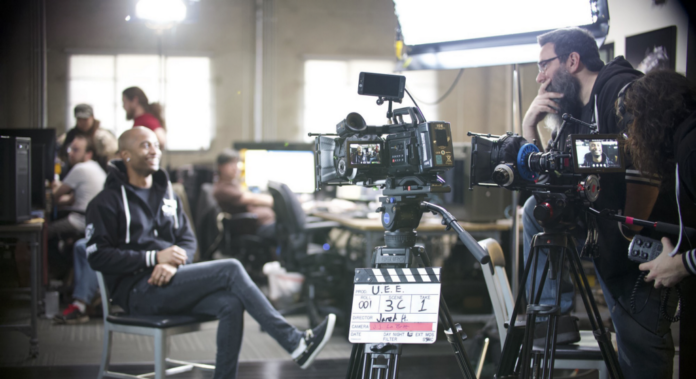
CIG cinematographer J.J. La Britt, seen here behind the camera, is commited to making sure the videos chronicling the game’s development match the Star Citizen aesthetic.

The production team uses Blackmagic cameras to shoot their variety of series. Cinematographer J.J. La Britt expresses how Star Citizen is a “…visually beautiful [game], so our shows should also be visually beautiful.” J.J. will regularly check in with the writers and developers learn about how the game is going to look and feel so he can then communicate that through each show’s set. J.J. describes how he will, “…go to the writers and be like ‘Hey can you tell me about Drake, what’s their feel?’ and they’ll be like ‘Well it’s dark and mysterious.’ So these interviews, I’ll set up a dark background with really contrasted lighting. Or let’s pop this background in to make it feel like one of the manufacturer’s.”

This is done not only as a means to stay true to the game’s visual aesthetic but also as part of the company’s dedication to doing more. “…[J.J.] helped to the raise the production value of a show that nobody was complaining about. But as with every aspect of Star Citizen, we ask ourselves ‘can we do this better?’ If yeah we can, then let’s do this better,” Jared praises.

BUG SMASHERS is a series where a game engineer takes a broken part of the game and goes through the process of figuring out why it broke and how to fix it.

How do ideas come about?

With over 73 million total views on their YouTube channel, Jared expresses that though they have achieved a certain level of success, they are always looking for new ways to engage their audience.

At the beginning of 2018, they ended two series and launched two new series in their place. This decision was made with a combination of listening to their community and diving into their YouTube analytics. Jared explains “The thing I love most is the average view duration. Views are nice easy number to look at and say ‘okay yeah those [videos] are getting views,’ but I look at the average view duration.”

As a case study, he uses one of their series, Lore Makers Guide, which features the writers of Star Citizen talking about story. Jared continues, “It doesn’t get a lot of views — there aren’t a whole lot of people interested in the behind the scenes of how a story gets made — but it has one of our absolute highest average view durations. The people who do watch that show watch more of that show than any other show that we have.” In fact, at the end of the year, when they polled their audience to see what their favorite show is, audiences actually voted Lore Makers Guide as the favorite show on the channel.

https://medium.com/media/9b7ee6f4bf59cbb5cddff050e68c90cb/href

Challenges

The biggest challenge the video production team faces is working with the development team to show work that is still unfinished. Jared points out, “We have a lot of artists, and art and artists no matter what field you’re in, whether you’re oil painting or sculptures or video games, they all share a common trait; they want their work to be DONE and to look as good as possible before you show it to anybody.” Because so much of what is produced is around work that is work in progress, it’s one of the biggest struggles when creating their many series. This can oftentimes affect the deadlines and production schedule of the many videos they produce. Jared continues. “…And we’ll tell them “That’s great we’ll will put italics like ‘work in progress.’” But they’re like ‘NO IT CAN LOOK BETTER.’ We go through that every single week. But that’s because everyone is so invested that even the work in progress they want to look great.”
Star Citizen is created by Cloud Imperium Games, LLC and Foundry 42, Ltd across 5 studios located in Santa Monica, CA; Austin, TX; Wilmslow, Manchester, UK; Frankfurt, Hesse, Germany; and Derby, UK.

Another challenge the team faces is communicating visual style and aesthetics across their five studios they have set up around the world between Europe and North America. In 2016, the company made a big push to create a Global Video Production department and embedded people in each of their respective studios. They did this to “…really build out our capabilities so that we could truly focus on the worldwide Global development of this game and it’s a challenge every single week,” Jared shares. Each studios focuses on different aspects of the game while still sharing some level of crossover.

It’s a logistical challenge but one the team seems anxious and eager to meet every week.

Rewards

The most rewarding aspect of their work, J.J states, is, “…the community. Like the immediate feedback we get when we make a video. We will release an ATV and I can get a message on Discord from a few of our community members [saying], ‘Oh this thing you guys did was so cool! Like this shot you got from the ship was so awesome!’ — like that. The immediate feedback is so cool and you end up becoming friends with these guys over it”

Jared even expresses how the criticism is rewarding. He explains, “[criticism] is never mean-spirited or anything; it’s them helping us improve our production…and they’ll help us identify that stuff. It’s a collaborative effort in every respect. I mean Star Citizen is a collaborative effort, so why shouldn’t outreach be collaborative, as well.”

Conclusion

Creating a project can be challenging and many would choose to wait until the project is ready to launch to share it, but based on how Star Citizen has grown their community, sharing the process may be the key. Jared believes that, “…an amazing chunk of our success came from those early years of showcasing the people that were making the game. You always do great with B-roll; you’ll always do amazing with flashy visuals. And if you can have the flashy videos and the production value and all that stuff, that’s awesome. But if you don’t focus on the people…”

The Cloud Imperium team gathers at Citizen Con, a convention celebrating the Star Citizen community as well as looking forward to upcoming game content.

The team also encourages you to experiment. Speaking from 13 years of experience on YouTube, J.J. emphasizes that you need to “…just experiment. You have to keep experimenting. Try different things, you know just do it. Keep on shooting, keep on rolling with it.”

The Cloud Imperium team gathers at Citizen Con, a convention celebrating the Star Citizen community as well as looking forward to upcoming game content.

Get YouTuber.

Just Keep Writing: An Interview with Sage Hyden of Just Write

Rising video essay star Sage Hyden sits down with YouTuber to discuss his video making process, to speak to some of his recent successes and to share about his channel’s humble beginnings.

JUST WRITE
SUBSCRIBERS: 272,367
UPLOADS: 33
VIDEO VIEWS: 10,338,653
CHANNEL TYPE: FILM
USER CREATED: MAY 11TH, 2012

For academics and film aficionados alike, video essays are a staple resource for critiques and commentaries on film and popular culture. Using the same visual medium, video essays allow for vast creativity, and YouTube has seen an explosion of essayists over the past half-decade. A rising star of this genre, Sage Hyden sat down with us to talk about his process of making video essays and how he interacts with the dynamic YouTube ecosystem.

YouTuber: It’s been interesting to see your page grow and grow recently, and I think we’re all interested in hearing about how you got started. To jump right in, how has this process been for you behind the scenes? Does your chanel resemble your first attempt on YouTube, or did you have to try out a couple of different ideas first?

Sage: I did; it actually took me a while to figure myself out. The first videos I made were actually way back in 2012 and they were about mythology (laughter). Those aren’t live on YouTube any more. A few years ago though, I started a different channel under a different name, “Sage Rants,” which I had been adding to up until last year. I re-looked at my work and figured out that what I had really been doing was talking about what makes a good story and what you can learn from other movies and TV shows when they go wrong or when they do something right. So, I just pivited the channel directly towards that.

YouTuber: Has it changed much since then? I imagine you’ve had quite a lot of interaction with your new subscribers.

Sage: A little, yeah. I feel like I do pretty much exactly what I want to do. There hasn’t been a video I’ve made that has been like, “Ah, I kind of have to make this video.” I’ve been fortunate, at least recently, that the topics I choose happen to be interesting to the people who are watching me. When I was doing the mythology thing, it was kind of like a test into YouTube — trying to figure out the technical side of it, like how to edit graphics and everything else. What I’m doing now is taking subjects that I know people are interested in and I use them as a way to introduce stuff that I am interested in teaching people about.

For me, it’s not just the opportunity to talk about “Stranger Things.” That was also an opportunity to teach people about Harold Bloom’s criticisms and “The Anxiety of Influence” and all of those ideas. I could of very easily just made a video about Harold Bloom, but it probably would have been less interesting to people. What I’m learning to do now is package videos. On the exterior level — like in the thumbnail. I know people will be interested in it, and I know I will as well. Also, it will have these underlying things that I slip into the video that add value.

YouTuber: Can you guide us through that process a little further?

Though Sage could have referenced any number of TV shows or movies to demonstrate how writers create empathy for their characters, he chose to use “Game of Thrones” as his example because of its rich narrative style and its undeniable cultural relevance.

Sage: For me, I’m trying to find topics that I have something to say about that hasn’t been said ad nauseum. It’s kind of hard to figure that out because there is so much content on the internet, which makes it hard to know if what you are saying is original. The idea, though, is to take a popular piece of media and figure out something that it does that is exceptional compared to other pieces of popular fiction, even though other pieces might be doing something similar. For instance, I have a “Game of Thrones” video where I talk about how George R.R. Martin creates empathy for his characters. Considering the things I point out in that video, I could have easily made that video about a ton of other writers. I felt though, for that video, there were things that were very important to his particular writing style and of course it’s “Game of Thrones,” something that people are very interested in learning more about. So, it’s about finding something that has a built-in audience and then finding an angle to it that is interesting, and once I have that, I can start writing.

YouTuber: Sounds like you have a great system worked out. How do you find those things you think people will be interested in hearing about and you know a lot about? Do you have a running roster of ideas that are half in the bag and ready to go, or do you start from scratch every time?

Sage: Thats a good question. It feels like it’s a different process every time. I do have a list filled with a hundred different potential ideas — things I could look into — and I have another list that is my next ten. I often find, though, that I have an idea, but when it comes to the week that I need to write that idea, it will completely fall apart. I’ll find that I didn’t really have something deeper to say about that idea, or that it will be like half of a thought. So I have to go back to the drawing board and figure something else out. I have kind of been leaning on movies and TV shows or books that I am already super familiar with and leverag[ing] that knowledge of it. For example, I made a video recently about “Rocky” because it is my favorite movie of all time, and I know a lot about it already.

YouTuber: Rocky! I wouldn’t have expected that, based on your other videos. Nice. So, when you write, are you a “write everything and then record” type of person or do you go back and forth between the two as you are working?

Sage: I research as I’m writing, looking for secondary pieces of support in all of the books on screenwriting and writing that I’ve read before, just going over them trying to find something to support what I’m saying or some piece of literary criticism just to kind of give a fuller video. That’s like eighty percent of the video for me, because after that, you record it, and it’s just trying to find visuals that will accompany it. Although, I will say one thing I do is I partition it in my mind a bit. I don’t let the voice in the back of my mind that says ‘that’s going to be really hard to come up with a visual for’ dissuade me from writing something. If I did that, that would really slow down the writing process. So, I kinda put my writer’s hat on, and I write the script as succinctly as I can. Then, when it comes to editing, I’ll be very frustrated with myself because it’s like, ‘oh now I have this big block of time that I don’t have a visual for,’ so I have to figure out a new way to say it. At least at that point though, I have the audio recorded, and I have something to work with. I partition my mind like that so that I can get the ball rolling.

YouTuber: That is a great way to go about it. So, now that we know you have your writer’s hat and your editor’s hat, do you happen to have a copyright hat? Given you use a lot of secondary media in your videos, do you have many copyright claims on your work?

Sage: Just for one of my videos. It hasn’t been a huge issue for me. I am using copyrighted content under fair use law, so I am a bit surprised it hasn’t been as big of an issue as it seems when I read headlines of other YouTubers. I think YouTube and other companies see the value of video essays and that they operate under fair use.

YouTuber: Yeah, video essays seem to fall directly under how fair use was written.

Sage: Exactly.

YouTuber: It seems like now, YouTube is a little volatile in terms of demonetization, and a lot of people are supplementing their YouTube income with a Patreon page. How has the monetary side of YouTubing been for you?

Sage: I do have a Patreon, and I think we are kind of in uncharted waters right now as far as YouTube’s new policies go. I haven’t had a big issue with copyright, but I have had an issue with demonetization recently. For example, in my last couple of videos, if you have even one word that dips a toe into an edgy subject, then YouTube’s algorithm will find it and demonetize it. Then, you have to go and submit a request to go back and look it over. My videos have been remonitized, so it hasn’t affected me too much, but there have been a few days of lost revenue.

YouTuber: That has to be annoying.

Sage: Yeah, but that’s what is great about services like Patreon. It’s a check against what’s happening on YouTube.

And I understand, like, why its happening; there are good reasons. I think they just have to figure out a way to get a little bit more precise with how they are doing the demonetization. There’s a lot of growing pains there, but that’s what makes Patreon the great service that it is. It provides that level of stability where things may go up and things may go down, but you’ll always have that base of your supporters.

YouTuber: That is good to hear, given the rough YouTube waters that have made many creators outspokenly uneasy. Finally, do you have any advice for other creators reading this that may want to follow a similar path as you?

Sage: First and foremost, just keep making videos and try to get better as you go on. I had a lot of trouble with that because I had long periods of time I would be making videos, and I would have long periods I wouldn’t because I would feel so critical about how good my videos were. I also would say, it might seem like an obvious point, but the first thing you got to nail down is what your branding is. One hundred times over, branding branding, branding. That is something that my channel struggled with a lot. I called one of my early channels Sage Rants just because I didn’t know going into it what I wanted to do. I had a name that was very vague. You had to watch a video or two of mine to actually understand what the channel was, and I think that was a huge barrier to my channel growing. You couldn’t really put your finger on what it was. As soon as I changed the channel name to Just Write, though, it was very clear to people, ‘oh, this is a writing channel!’ If they were interested in seeing videos about writing, then they knew what it was and would subscribe and hopefully catch the next video and the video after that. Finding a way to brand yourself in a way that you are comfortable with, I think, is hugely important to creating something that you are proud of.

Get YouTuber.

Conspiracy Theory: The Adpocalypse is Going Nuclear

It’s time, friends. Grab your bug-out bag and head to your fallout bunker. You’ll need a stockpile of food, water and a hard-wire internet connection because the Wi-Fi in bomb shelters is terrible. That’s right, we’ve passed the point of no return; we’re at DEFCON Negative 2: complete nuclear Adpocalypse.

If we went into a global conflict like WW3, maybe humanity would die out, but at least cockroaches would survive. The Adpocalypse is worse. I doubt even those pesky insects could deal with the darkest evil ever to face content creators: fallout of demonetization. I mean, think about it: it’s got “DEMON” right at the start of the word; we should take a hint. Clearly The Man and Mr. YouTube have colluded together, performing ancient blood magick and summoning dark spirits into existence to prevent creators from being able to make a living through ads.

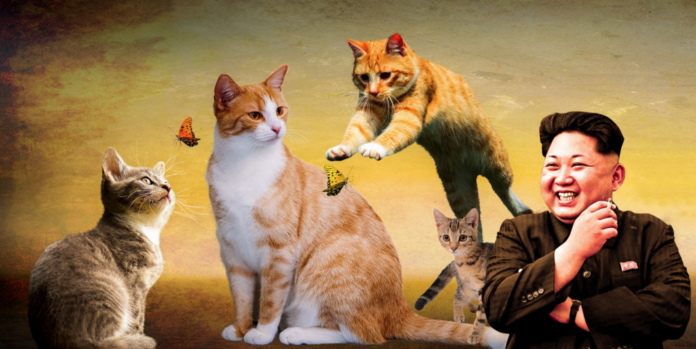
The ramifications of YouTube’s new ad policies are huge. It doesn’t take a super-genius to recognize that right around the time of demonetization, US relations with North Korea became even more strained. However, few people probably realize the reason: Kim Jong-un loves cat videos.

I have reason to believe the North Korean dictator had secret plans on boosting his country’s GDP by producing a channel all about cute little kitties. However, once he realized that the site’s trending features had been revamped and he likely wouldn’t find success because of the new YouTube algorithm, Kim Jong-un started testing missiles and threatening the area where YouTube is head-quartered: the west coast of the United States.

This threat, caused by the Adpocalypse, is even bigger than in 2015, when Vladimir Putin almost declared war because Jenna Marbles stopped making “What Girls and Guys Do” videos.

Back to current day; is there any hope? Any reason to go on?

No, probably not.

It’s doubtful YouTube will go back to the old model. The strings have been pulled; the puppets have danced. The Man is back to his old tricks, manipulating every channel of power to make sure he stays on top and we, the lowly creator class, with our hilarious prank videos and epic fail compilations, will never be recognized for our brilliance.

We, as a species, are doomed.

This international crisis is beyond reconciliation. We, as a species, are doomed — we have been demonetized. All we can do is hope that in the distant future, whatever life form is next to reign supreme on this planet can find some some vestiges of the past and learn from our mistakes.

Humankind has surpassed the limits of mathematics, science and art. Now, the only thing worth striving for, ad revenue, has been stripped from us. We have nothing left but to count the days until we are completely consumed by a new dark age; a feudal, tribal state, where warlords reign supreme in a constant battle against each other and the elements for sheer survival. Or even worse, we return to print media.

Get YouTuber.

A Beginner’s Guide to Consumer Advocacy for Beauty Vloggers

In the way of new media, the term became a running joke on Twitter almost as quickly as the assured headlines rolled in. From shared apartments to presidential marketing suits, people wondered: what on earth is an influencer?

It’s a vague, peppy term that feels strangely sufficient to describe the YouTube economy of content that has evolved in the last few years. Some creators do produce music, films, books — and those actions come with their own titles — but the truest medium for anyone above a certain subscriber count is, perhaps, influence. With eyes and advertisers slathered over the video-sharing website, the question for some creators becomes how to use that sway.

The realm of beauty vlogging might seem mired in consumerism, but each product could be reimagined as a catalyst for discussion. Everyone makes personal choices about what they buy and use on a daily basis, and those decisions construct real influence, no matter the size of the audience.

Under the current global economic system, money is nearly always connected to some form of violence: even if someone only buys from their local farmers market, the bank of their credit card could be funding human rights violations somewhere else. Consumer-based activism is complex, which is all the more reason that more people should be encouraged to try.

Social media stars do have a responsibility to be informed on social issues just like anyone else, if to not actively point their audiences in an informed direction. For the beauty vlogger, critical thought must extend past the efficacy of the product to consider the forces that created it. Here are some of the major movements in the beauty domain.

Animal Rights

Probably the most visible of the movements on YouTube, people have protested against cosmetic experiments on animals since the 1980s. A search for “vegan beauty” on the platform turns up nearly two million results, with people discussing their favorite products that don’t use animals to test. One way to view the argument is that, while it is unethical to test new medications on humans, making animal trials necessary, makeup is more of a privilege than a right. The European Union officially banned cosmetic animal testing in 2013, while fewer and fewer American companies use the practice, so the public interest and petitions are working.

Lex Croucher’s Vegan & Cruelty-Free Gift Guide is one of many instances of creators helping viewers find more humane makeup options.

Boycott, Divest, Sanction, or the BDS movement

Inspired by the boycotts against Apartheid in South Africa, this campaign to end Israeli human rights violations is part of the larger Palestinian resistance. As in the name, the strategy is to boycott, divest from, or place sanctions on cultural and financial institutions that support the occupation and oppression of the Palestinian people. BDS was just nominated for the Nobel Peace Prize, and the movement gains traction every day. Many cosmetic companies are unfortunately tied up in this market, but alternatives are just as present.

Kaya Empire uses her influence to direct viewers to the her favorite BDS-safe makeup products.

Labor practices

It does not feel adequate to describe the sweatshop systems and child abuse coordinated and maintained by multinational governments and companies as simply “unethical.” These issues cross with beauty in a myriad of ways, from the supply chains of fast fashion to the smallest ingredients. For example, the mineral mica is a practically ubiquitous component of color cosmetics, but approximately 20,000 children work in dangerous conditions to mine the material in northern India. Mica mining has only recently been legalized by the country after investigations revealed how often these children die in the unsanctioned mines.

Rian Phin highlights the major problem of child labor in the mining of mica, a mineral commonly used in a variety of cosmetics.

In other regions dealing with debt bondage and poverty, jobs in garment factories can be the best way for people to provide for themselves and their families. For these issues, boycotts are not necessarily the ultimate protest because policy decisions structure the local economies to rely on these hazards. Most activists within these countries recommend contacting corporate officials to ask them to take responsibility and improve working conditions. It is essential to move with this knowledge, and understand that glitters and clothes are more than possessions to be briefly worn and discarded; they belong to a wider exploitative system. For more information on these issues, Rowan Ellis and Rian Phin are quite educational.

Use that Influence

These are just a few aspects of being an informed buyer and promoter. Beauty vloggers should absolutely research the supply chain of brands that they use in order to fully educate their viewers. Vloggers have intimate access to the opinions of their viewers, with more people taking online reviews into account when purchasing new products than ever before. The larger cosmetics market has sped up to recognize the leverage of vloggers over the market, and the vlogging scene is even more powerful when taking these concerns into account.

Vloggers have intimate access to the opinions of their viewers.

From what I have seen, the most effective method is to explain what you use and why; people are more receptive to being inspired by good examples rather than just being told what to do. The online beauty community is full of people speaking honestly and passionately, and that influence can be exercised even more.

Rian Phin highlights the major problem of child labor in the mining of mica, a mineral commonly used in a variety of cosmetics.

Get YouTuber.

Advertisement
Advertisement
communal
communal