Home Blog Page 158

A creator’s guide to New Year’s resolutions

We have the ancient Babylonians to thank for New Year’s resolutions, but if you’re a video creator, chances are you too have dabbled in this ancient practice.

According to the History Channel, the annual promise to do better at the beginning of the year started 4,000 years ago in what is today Iraq when people made a yearly oath to the gods: to return all things borrowed to their rightful owner and to pay off all debts. Tradition had it that if you delivered, the gods would bestow favors, but if you didn’t, things might not go so well for you.

Fast forward several centuries and the consequences for not sticking to our New Year’s resolutions aren’t quite so dire, but our annual preoccupation with promises for self-improvement hasn’t diminished. According to some of the online chatter, DIY video creators are always looking for ways to improve their output and capture eyeballs for their channels. Resolve to do better appears to run thick in the veins of creators.

Learn from experience.

Christopher Dover, who hosts a sport shooting channel out of Texas, fears that recent YouTube upheavals, such as the Adpocalypse, might discourage creators from going wholeheartedly after their YouTube aspirations.
“I feel most creators have probably not remained very steadfast with resolutions,” says Dover. “I think the thing that has helped me to trudge through issues is continual education.”

Dover says he’s made a commitment to himself “to keep educated on all things YouTube.” This year he gave three resolutions priority: “To increase my branding so that I could attract more sponsors, advertisers and affiliates; work on my fan funding options; and finally hone my promotion practices to target more engaged and loyal viewers.”

Dover says he’s getting it done using consistent avatars, banners, colors and thumbs across social media profiles and websites. “It is a matter of making your channel (which for me is a legitimate media business) look more attractive, look bigger than it is and have a presence everywhere you turn.”
So far this year, Dover has stuck to his resolutions and brought his YouTube watch time up by 129 percent.

One thing about New Year’s resolutions is that they’re not much use if you don’t shout out to the world what they are. Friends and followers will check up on you to see if you’re actually walking the talk and, most importantly, they will become your social support network.

Brandon Joseph Reese is just starting out on his YouTube career and hosts an “amazing world of Pokemon” channel out of Danville, Pennsylvania. He says New Year’s resolutions are useful during these early days of his life as creator.
“I think that making goals like this is definitely key to being an influencer, because you want to do it as best you can,” says Reese.

He says his main goal is for his channel to start paying for itself. “I think that in order to achieve my goal, I will probably be putting the skills I gained through YouTube (Academy) to use,” says Reese.

Charlene Dipaola is a YouTube veteran who has brought over 30,000 subscribers to her fitness channel by maintaining a robust presence across creator platforms, communities and forums. She frequently reaches out to online creator groups to test out new ideas and never stops soaking up new information on all aspects of the trade, from marketing and monetization to production values. Dipaola knows it will take discipline to stick to her resolution of finding ways to increase her channel revenue.

“This year I want to focus on sponsor outreach,” she says. “I have consistent views now per month. I would like to get at least two sponsored videos out of my 8 monthly videos I produce.”

Get SMART.

A 2017 Statistic Brain Research Institute Survey says that “People who explicitly make resolutions are 10 times more likely to attain their goals than people who don’t explicitly make resolutions.” Bad news is the Institute also found that only 44 per cent of Americans stick with their resolutions for more than six months.

Behavioral scientist Dr. Paul Marciano (Carrots and Sticks Don’t Work, 2010) takes it up a notch: his research suggests that of all Americans who make New Year’s resolutions, only eight percent achieve them. But Marciano does offer tips for following through on the annual promises we make to ourselves and to the world. Published on forbes.com these universal tips are transferable and can easily be applied to goal-setting agendas of channel hosts and creators.

SMART is Marciano’s acronym for making resolutions that are ‘specific, measurable, achievable, relevant and time-bound.’

Specific — It’s not enough to say that you plan to get more people to watch your channel. Be specific about how you intend to make that happen; a.k.a. ‘clearly defining your goals.’ For example, you could resolve to create a network, a community of like-minded channels. Taking a genuine interest in the work of other creators operating in the same realm and sharing good content with your community can be mutually instructive and inspiring.

Measurable — Measuring your goals in creator speak means tracking channel traffic, which is covered by YouTube and Google Analytics. If you haven’t done it already, you probably want to link the two tools and get your Google Analytics Account I.D. YouTube analytics tell you how people found and viewed your video, whereas Google Analytics tracks what people are doing on your channel, how people actually find your channel page, what they googled that led them to your channel and more. The resolution or discipline is to monitor analytics data religiously and use that information to drive relevant strategies aimed at prospective subs. “If you can measure it, you can change it,” is Marciano’s mantra.

Achievable — For creators ‘achievable’ is code for ‘be patient and be persistent.’

For her pop culture channel Why Stuff Is Great (6,500 subs.) YouTuber Anna Eichenauer surveyed a diverse range of creators and posted an anecdotal analysis of how long it took them to reach the magic plateau of 1,000 subscriptions. Creators came back with a range of responses: “Two months of hustle and a plan”; “It took me a year of uploading very regularly”; and “Three years and we are at 417!” Eichenauer’s survey results point to achievability being about rolling up your sleeves, staying consistent in your efforts and not giving up.

Relevant — For creators relevancy can mean having the discipline to spend time only on your resolutions and not much else. But perhaps more importantly, relevance can also mean, asking “are these goals relevant to me?” Why do you want to achieve them?

Time-bound — Make your new resolutions a priority and mark them on your calendar. Don’t just think about outreach letters to channel hosts or e-mail newsletters for your subscribers, actually schedule them into your calendar.

Like many self-improvement gurus, Marciano believes that achieving goals and sticking to resolutions isn’t so much about willpower as it is about developing the right skills and strategies.

Do what you can.

But what if you’re not hitting your goals? What if conditions prevent you from taking care of business? The consensus in the self-improvement bloggerverse is any effort towards moving your goals forward is better than no effort. Maybe you’ve had to cut back on sponsor outreach activities because life happened ‘while you were busy making other plans.’ Consider inviting loyal collaborators from your network to keep things rolling and do what needs doing when you can’t get to it.

Eichenauer says while New Year’s resolutions can be valuable for focusing on goals, she finds they can also set you up for failure and disappointment. “Make sure that you choose realistic goals that aren’t too much of a stretch,” says Eichenauer. “For example, don’t try to double, triple or quadruple your video output. Instead, try to increase your output by 20, 30 or even 50 percent. Then, if you feel like you can keep up your new output speed comfortably, you can tackle your next goal.”

It took Eichenauer about a year and a half to sign up her first one thousand subscribers. “However, I didn’t post regularly, often less than once a month,” she writes. “I bet I could have reached this number a lot sooner with a more consistent schedule.”

If you do get knocked down on your way to your goals, Marciano says resilience is key. “It isn’t whether you get knocked down, it’s whether you get back up,” Marciano posits in an online interview. “Just acknowledge the mistake and recommit to the path.”

The Babylonians weren’t the only ancients who promised to be and do better in the New Year. We can hold the Romans responsible for tinkering with the calendar in 46 B.C. to create the month of January, named after Janus, the god of beginnings and transitions. Typically represented as a two-faced god who looks to the future as well as to the past, Janus and January remind us that if we are to move forward as creators we must be prepared to learn from the past and from where we’ve been.

Here’s wishing you a most resolute New Year!

Get YouTuber.

How to set good Patreon perks with Mary Kate Wiles

When it comes to making videos online, the dream for many is to make enough money to pursue this full-time. And with Patreon, the online crowdfunding site, growing with over 1,000,000 monthly active Patrons, this dream is becoming a reality for more and more creators everyday. We got the chance to talk with one of those creators, Mary Kate Wiles, about what she believes is the best way to run an engaging and sustainable Patreon page.

Mary Kate Wiles, who you may recognize from such web series as The Lizzie Bennet Diaries, Edgar Allan Poe’s Murder Mystery Dinner Party, and the upcoming project The Gilded Lily, has been a part of Patreon since it’s early days and is currently living out her dream of being a full-time actor thanks to the support of her patrons on Patreon.

“Patreon allows me to be available to go on auditions, make self tapes, or just spend time learning material that I need. A really difficult part of being an actor is juggling side jobs with auditions that can come up last minute. Thanks to Patreon, I know I’m available when auditions pop up. And I have more time to spend on them, so I do better!”

https://medium.com/media/b084a4820d7d1be9ae2ac7577dc5e9d0/href

Selecting your Patreon Perks

Patreon currently has 50,000 active creators who are all crowdfunding their art with the help of their patrons. But it’s not just a one way street; Patreon creators offer different reward tiers for different levels of support.

Mary Kate observes, “The majority of people on Patreon are musicians or artists or sketch groups or podcast, or whatever so there’s this built in, like, if I’m musician and you support me at this level you’ll get a song demo or a drawing. That was really difficult for me to figure out, like what to offer. My rewards are really just sort of based on what I can offer personally to the people.”

I write like 45 notes a month to my patrons and mail them.

When coming up with what to offer people it’s important to make an offering that is both sustainable for you to deliver on and something that patrons will enjoy on a monthly basis in addition to the content they’re supporting you in making.

“Most people are going to pay at the lower level, so find something that is easy for you to fulfill for a large group of people that’s also exciting for them.”

Offering a patrons only twitter and Instagram are lower-level perks that don’t take as much time but still give Patrons an experience that not everyone gets.

Offering access to patrons-only Twitter and Instagram accounts are lower-level perks that don’t take as much time but still give Patrons an experience that not everyone gets.

The key to great Patreon perks is making sure the perks feel special. MK emphasizes, “…make it personal. That’s what makes people feel special, those personal connections. It’s not like you have to be everybody’s best friend, but you can have a personal connection as much as you can. I think that will only make your patrons feel more a part of what you’re doing.”

A few of Mary Kate Wiles’ current Patreon perks include access to patron-only streams, early access to her videos, a patrons-only Twitter and patrons-only Instagram, and she even sends personal notes or postcards to patrons.

Offer multiple tiers in the sub-$10 price range to encourage more people to support you through the platform.

Pricing Your Perks and Tiers

Once you’ve figured out what to offer your patrons, you need to select how you want to price each tier out.

The important thing to remember about Patreon is that your patrons are supporting you an on-going basis. According to Patreon, the average pledge per patron is $12, so you have to think about a majority of your patrons coming from lower level tiers.

“$25 a month is great, but you are more likely to have five people who want to support you $5 a month than to have one person support you $25 a month.

“Every month I have a group hangout with patrons who pledge at the $10 level or more. And there are folks from the Philippines, England and of course the USA in this pic! How freakin’ cool.”

“If people like you enough to support you on Patreon financially, they just ultimately want to support you.”

-Mary Kate Wiles

MK continues, saying, “You’re going to get the most traction at the under-$10 level so those are the important ones you want to think about. And I think it’s worth having multiple perks like $1, $5, $10. After that you can sort of be more choosy around, like, how much you want to charge people and how many different perks you want to have.”

“Every month I have a group hangout with patrons who pledge at the $10 level or more. And there are folks from the Philippines, England, and of course the USA in this pic! How freakin’ cool.”

Conclusion

Starting a Patreon page is a great step in making your online video carreer more sustainable. It offers you a closer connection to you audience and in return allows you to continue creating your art long term. As Mary Kate Wiles mentioned, it’s important that you have a variety of offerings that make your Patrons feel special but also that they are thing that you can scale and make sustainable for you to offer long-term.

“If people like you enough to support you on Patreon financially, they just ultimately want to support you. Know that whatever you’re offering for people is the icing on the cake.”

As you grow your Patreon, keep in mind that it’s all about the connection, value and creativity that you offer. That is what’s going to make your patrons glad they support your art.

Get YouTuber.

Beyond the Screen: Strengthening Your Viewer Relationship

Despite the prevalence of buying Instagram followers, the best way to grow and maintain a successful digital career is through a real audience.

As you build a relationship, you’ll learn how to craft content that your viewers will respond to while still making things that you enjoy. A more loyal audience means more reliable views and interaction as your channel develops, among other benefits.

Be realistic.

Before we go too far, it’s important to remember that relationships online aren’t the same as in the physical world. Viewers may have a distorted vision of content creators due to something that sociologists refer to as parasocial interaction; this is when a person feels they intimately know a stranger because they watch them on TV or now, YouTube. Of course, these relationships are very one-sided and mediated by screens rather than physical interaction. This phenomenon is more common with vloggers or other personality-based forms of content, rather than cooking tutorials, for example, but it’s still something that creators should consider.

Learn what your viewers appreciate and respond to that while still allowing yourself creativity.

No matter how casual you feel when you turn the camera on, you are still creating a version of yourself that is different from how you appear offline. Creators should remember that even if they feel a strong connection to their audiences, it’s just not possible to truly sustain individual relationships with thousands, or even hundreds of people. It’s a tricky dialectic in that you have to respect your audience as individuals instead of an anonymous blob of usernames while also understanding that you won’t have the time or energy to really have a rapport with all of them individually.

Starting your videos with a simple greeting can make a big difference in how approachable you seem to your audience.

Encourage engagement.

All of that said, there are many healthy ways to interact with an audience. The easiest location for this is clearly YouTube, through your videos and the comment section. Even just a simple greeting at the start of your videos establishes you as friendly. It’s also fun to figure out a specific name for your audience, rather than the ubiquitous “hey guys.” Reference comments from the past in future videos for simple inside jokes, and be sure to stay active in the comments section in general. This helps filter out nasty comments, and it’s the most convenient way to interact with viewers. Sometimes, it’s more necessary than usual to watch your attitude when responding to “constructive” criticism, but the comments section can still be a good place for conversations. In every video, try asking a question to invite viewers to respond!

Use platforms outside of YouTube to connect with fans between uploads. It’s a great way to get feedback and form relationships.

Use social platforms with intention.

It’s also important to talk with viewers on any other social media platform that you frequent. In the vein of parasocial existence, it’s suggested to figure out which platforms you want to use in conjunction with YouTube videos and which should stay private for your personal life. On that note, decide whether you want to have a specific email for fans to reach you by. Taking use and purpose into account, Twitter and Instagram are probably the best non-YouTube platforms for audience interaction, while Facebook is more for close family and friends — but figure out what works best for you! Favorite those tweets and respond to tagged posts to develop your audience relationship — it’s pretty intuitive. One fun tip is to pick your favorite emojis and use them often enough that they are associated with you. There’s other smooth ways to stay connected, like wishing your audience good morning or reminding people to stay hydrated.

Cultivate the audience you want.

Across platforms, figure out what themes from your community you like and dislike. For example, if fans are harassing people in your name, put an end to it! Whereas if people are building friendships with each other in that community, that’s something really cool that you can encourage in your videos.

Overall, you should learn what your viewers appreciate and respond to that while still allowing yourself creativity in your content. Running jokes can be fun, but don’t use too many or it could confuse new viewers. Perhaps the most fundamental aspect of building an audience relationship is finding ways for viewers to participate. Whatever sort of content you make, it should naturally translate into methods of connecting with the people watching.

For instance, live streams are a really useful tool, whether you want to play video games, apply makeup or just chat as you make a meal. Polls on Instagram and Twitter to help decide what new videos you should make are also a fun way to involve your audience. Giveaways on your platforms are also amusing, and get people excited and eager to engage. It may take a while to build a relationship with your audience, but the effort is part of the journey.

As a whole, the most important thing is to create reasons for your viewers to be invested in your content as well as entertained by it.

Get YouTuber.

h3h3 Productions strengthens fair use on YouTube

The fair use doctrine recently won an important legal battle, providing some more clarity on how copyrighted work can be used without necessarily seeking permission from the owner while also not infringing the owner’s rights. Here’s what happened.

Co-authored by Roman Zelichenko and Mark Levy

The case is Hosseinzadeh v. Klein. Plaintiff Matt Hosseinzadeh, aka Matt Hoss, created a series of videos starring himself as “Bold Guy,” a “confident and funny” character who would try to pick up women in various scenarios. The video at the center of this legal battle is entitled “Bold Guy vs Parkour Girl” in which “Bold Guy tries to pick up a girl who challenges him to a parkour / freerunning chase.”

A legal battle ensued, putting the Kleins, and more importantly fair use, at risk.

In this video, Bold Guy approaches a woman wearing somewhat revealing workout clothes and engages her in conversation. At first the woman rejects and rebuffs Bold Guy’s remarks, but then in a sudden turn of events, she relents, challenging Bold Guy to catch her if he wants to “have her.” A chase ensues through what looks like a university campus. Ultimately, Bold Guy catches up to her, but then in yet another twist, challenges her to catch him if she wants to find out what he wants to “do with her.” It’s cheesy and uncomfortably suggestive.

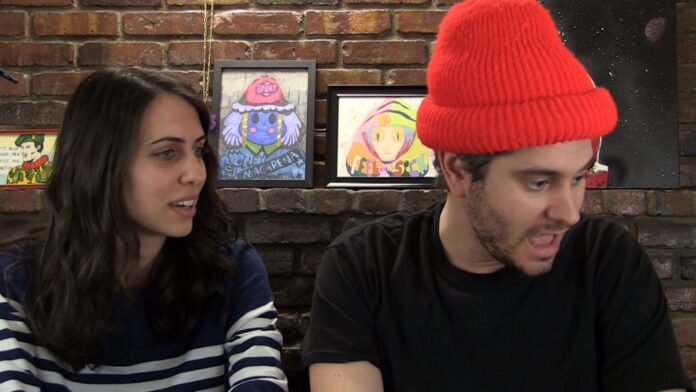
Defendants Ethan and Hila Klein, who run the popular YouTube channel h3h3Productions, made a reaction video to “Bold Guy vs Parkour Girl.” In it, they poked fun at the script, commented on the chase scene and teased Bold Guy’s clothes while having their own fun — joking with one another, going off on random tangents, and so on. Watching the reaction video, we found it to be light-heartedly satirical and not overly offensive. Despite their criticism, the Kleins mentioned their respect for the plaintiff, complimented his work, and told viewers to visit his page. No harm, no foul.

https://medium.com/media/51b9fe20e6c712fd3716f033d6b2dca3/href

Well, Matt Hoss didn’t feel the same way. Hoss emailed the Kleins asking them to take down their reaction video. They declined, pointing to, among other things, the doctrine of fair use. Hoss disagreed and sued the Kleins. A legal battle ensued, putting the Kleins, and more importantly fair use, at risk.

Not to kill the suspense (this is all in the public record anyway), but the Kleins ultimately prevailed. After over a year of litigation and an eventual trial in the Southern District of New York, Judge Katherine Forrest sided with the Kleins on all three of Hoss’s claims.

Hoss’s first claim was copyright infringement — that when the Kleins used clips from “Bold Guy vs. Parkour Girl” in their reaction video, they violated his copyright to the video. The Kleins called on the principle of fair use in their defense.

Ethan and Hila posted a video to celebrate winning the lawsuit after Judge Katherine Forrest handed down her ruling on the case.

According to the U.S. Copyright Office, fair use is “a legal doctrine that promotes freedom of expression by permitting the unlicensed use of copyright-protected works in certain circumstances… such as criticism, comment, news reporting, teaching, scholarship, and research.” Courts weigh four factors to decide fair use: the purpose behind using the new work, such as nonprofit versus commercial purpose, the nature of the new work, how much of the copyrighted work is used, and the effect on the market of the work.

Regarding the first factor, which weighed overwhelmingly in favor of the Kleins, the judge noted that the Klein reaction video was “quintessential criticism and comment,” listing examples of Ethan and Hila Klein clearly criticizing and commenting on the Hoss video.

As for the second factor, the judge agreed with Hoss that his work was creative rather than “factual” in nature, which weighed in his favor.

For the third factor, while the judge agreed that a large portion of the Hoss video was reproduced — specifically three minutes and fifteen seconds of a five minute and twenty four second video — she felt that this was an appropriate amount of the video for the Kleins to be able to get their point across, and so did not weigh this factor in favor of either party.

And for the final factor, the judge wrote that the Klein video did not affect the market for the original Hoss video, that indeed they were separate videos and not substitutes for one another. She concluded that fair use protected the Kleins against the claim of copyright infringement.

Hoss had two more claims against the Kleins. The first claim, that the Kleins misrepresented their DMCA takedown counter-claim, was dismissed by the judge since she found that the Kleins had a “good faith belief” that they were not in violation of the DMCA. The other claim, that the Kleins defamed Hoss by releasing a subsequent YouTube video about the lawsuit, was dismissed on the premise that this lawsuit video was mostly pure opinion, which cannot legally be the basis of defamation.

Judge Katherine Forrest sided with the Kleins on all three of Hoss’s Claims.

In the end, not only did the Kleins win, but the YouTube community did as well. “Reaction” videos abound on the internet, and this case helped establish some legal precedent in favor of reaction videos as independently protected works, even where the reactions may be negative and potentially upsetting to the owner of the original work and where a fairly large portion of the original work is used.

Get YouTuber.

How to Grow an Audience on YouTube from Scratch

Building your channel from the ground up can be intimidating. There’s no surefire way to boost your subscriber count, but there are plenty of little things you can do to ensure steady growth.

Finding Focus

One of the main things to consider before you get your channel started is what kind of content you want to make. Coming up with a clever channel name isn’t enough; you’re going to need a solid plan for how you’re going to populate your channel.

Aimless content without a clear sense of purpose will kill your channel before it has a chance. If each video is drastically different from the last, viewers won’t know what to expect, and the lack of direction will prevent them from returning.

This doesn’t mean you can’t branch out and discuss a variety of topics, but everything needs to match a style you choose. News recap, comedy and “talk show” videos allow for a plethora of topics, but maintain a format.
No matter what you’re making, it’s vital to think ahead. If you build your subscriber base uploading Minecraft building tutorials but suddenly shift to outrageous GTA V Let’s Plays, you’ll lose the followers you’ve built up. Without a plan, it’s nearly impossible to gain a stable base of viewers.

Polish it Up

A strong personality and unique ideas can only take you so far before shoddy work brings you down. Pay attention to production basics like lighting, sound and framing, add motion graphics, and throw in intros and outros to give your videos a professional aesthetic.

YouTube puts new content higher on search results in order to see if people will like it. If your content is good, but the production values are low, people won’t be coming back, and any boost you see from the search ranking will amount to nothing.

Bring the same attention to detail to the upload process as well. A great headline helps a video standout in search results; so put thought into making yours engaging.

YouTube’s a crowded place and viewers sometimes decide what to watch based off thumbnails. As such, make use of the custom thumbnail option and craft an eye-catching image relevant to your video.

Keywords are important as well. Imagine yourself as the viewer. What terms would you use to find videos like one you’ve created? Are there any major events to include in tags? Whatever terms you come up with are the best to use, as SEO works best when it’s simple and inclusive.

Consistency is Key

Having a firm plan in place for the kinds of videos you want to produce makes the next crucial aspect to growth much easier: consistency. This cannot be emphasized enough. Being consistent on your channel is the best thing you can do to increase subscribers and overall viewership.

Nobody wants to waste time on channels that post videos up regularly for a week or so, only to go completely silent for long periods of time. It may seem like a simple step, but establishing — and sticking to — a set schedule for your video releases will go a long way towards building up your subscriber base.

A good way to ensure consistent releases is to build a backlog of videos before launching your channel. Then you’ll have videos ready to publish at your leisure, while you create new content for down the road.

Obviously, some videos will require a quick turnaround time — news or event related videos especially — but if you’re able to work ahead, take advantage. This way, if something happens — technical difficulties, personal emergencies, whatever — you’re still able to upload on schedule.

Promoting your videos on different social media platforms is a good way to reach those who might not have found your video otherwise.

Spread The Word

When you’re just starting out, trying to attract viewers can feel a bit disheartening. Just because you made something doesn’t necessarily mean people will watch it.

Once uploaded, it’s time to promote your video far and wide to get as many eyes on it as possible. Social media is a great tool, so sharing your latest videos on Twitter, Facebook, Tumblr and whatever else you use is important. Aggregate sites like Reddit bring your content to a far larger audience and provide a better chance at snagging viewers you otherwise wouldn’t find. Even building a minimal website, where you embed your videos as individual posts that you can then promote separately, helps spread the word.

Saturate the interwebs with your videos and take every opportunity you can to share them with others online. The key factor to growth here, however, is to do this with every video you publish. Just as it’s important to stay consistent with your video posting, you have to be consistent in your promotion tactics, especially since you never know which video is going to take off.

Growth may seem like a daunting task at first, but if you stick to a plan, stay consistent in delivering high quality content and promote your work steadfastly, you’ll be on the path towards your viewership goals.

Get YouTuber.

Testing, one, two, three: How to acquire demo units for your YouTube reviews

More and more companies are starting to understand the value of user reviews. They will often send out demo units for YouTubers who want to get their hands on the latest gear for a review. We look at the ins and outs of acquiring demo units.

Who doesn’t enjoy the fresh smell of new gear? Especially when that new gear didn’t cost you the new gear price, or better yet, it’s free. It is possible to have companies send you new products and equipment in exchange for a review. These products are referred to as “demo units.” We talked to a YouTube reviewer and a few company reps to find out what it takes to get your hands on the latest gear.

One Channel’s Experience

Sean Cannel runs a channel called Think Media, which hosts dozens of product reviews along with tips and tools for YouTubers. He has 350 thousand subscribers and nearly 20 million views. He tells us that there are generally two ways that companies provide demo units: “The first is a unit that you just borrow. Typically a company will just send it out to you with return mailing label in the package. You’ll have the gear, use it, review it for a certain amount of time, then repackage it and drop it back at the post office. Its a pretty cool way to go. But the second way is even cooler, if you can get it. You basically get a review unit that you get to keep, so it’s free gear!” Sean says this second method is usually reserved for established product reviewers.

Sean Cannel of ThinkMediaTV reviews all kinds of new video gear. He says the first step for aspiring YouTube product reviewers is simply to start asking for demo units.

This veteran YouTuber tells us that getting started may be easier than your think — simply ask. “If you’re just starting out, I would say don’t get too discouraged. I’ve seen people who only try one or two companies, they don’t hear back and they give up. I think you’ll see results when you’re trying like twenty companies, or even 50 or even 100! Really putting it out there.” Sean says that once you get established, the companies will start approaching you.

It’s really all a matter of starting small and developing a reputation and an audience.

He says that a good way to get up and running with review units is to approach smaller companies — and not for big ticket items. He says that he emails marketing reps or uses Twitter to connect with a company and make the ask.

Advice from Brands

Gus Harilaou is the President, The Americas for Miller Camera Support Equipment. He tells us that they generally loan out gear and have users have to go through a basic process: “We have a standard loaner agreement that we send out for the customer. Basically just stating the obvious: You’re accepting the equipment and while its in your possession, you’ll care for it. We just ask how long they want to demo it, evaluate it, and review it. That can be as quick as a week or as long as a month. From there they just return the paperwork, filled out, signed, and we ship the equipment out.” He says they primarily interested in reviews for newer product lines, but they don’t mind seeing serious user reviews on their older products.

Gus tells us that Miller actually welcomes review requests, “A lot of equipment buyers these days want to demo units for themselves or they want to read one or 10 reviews before they make a purchase. So, the more the merrier.” In other words, their company knows that buyers often watch YouTube reviews before they buy. He says that he cannot remember them turning down a request for a demo unit.

GoPro is another company that understands the benefit of online reviews. Katie Babineau is the Senior Manager of Global Social Media for the action cam giant. She outlines their requirements: “When we send demo units to vloggers, we want to ensure these are folks who are familiar with GoPro, our products and ecosystem, and who are excited to give a fair evaluation of our products. Their social reach is a big factor for us too — they need to have a significant following (typically 100K+) and reach beyond the audiences we’re traditionally known for.”

Additionally, Katie tells us that they work with a group of users who are part of their advocacy program, made up of partners who have a passion for their brand, “They’ve gotta love GoPro, or at least embody what we stand for — inspiring others to live their best life. Social reach is also very important since the main object of the program is reaching new audiences and driving demand across key regions. Typically, we target a social reach of 50K and above, but this threshold is flexible based on the market.” Katie notes, “They also need to be a solid creator and someone who is eager to learn — we spend a lot of time on training and elevating skill levels as our products progress and evolve.”

Start where you are.

It’s really all a matter of starting small and developing a reputation and an audience. These rules would generally apply to just about any industry, not just video content. The first step might be to rent equipment. As your channel grows, who knows, companies might start knocking on your door.

Get YouTuber.

Fighting the Adpocalypse with Ads Targeting Adults

The Adpocalypse is upon us and few are righteous enough to survive the horror that is demonetization. Creators are being forced to choose between betraying their creative voice and loosing revenue. Many are fleeing YouTube for alternatives like Twitch and looking for revenue in new places like Patreon, but there is another option.

This year saw major restructuring to the way content creators can monetize their YouTube channels. Early in 2017, we were hit with the Adpocalypse — a massive boycott of YouTube by major marketers, followed by a series of changes that altered the way ads are run on videos. The new changes mean that creators can lose revenue if their content is falls into any of a number of categories including “shocking” or dealing with “sensitive social issues”.

In this modern era of media consumption, niche is the new mainstream.

This was a blow felt across the board. Science educators and prank channels, gamers and beauty vloggers — somehow the changes seemed to affect everyone on the platform. Content creators simply aren’t making as much money as they had been.

What could YouTube do differently?

Specialized content could be sponsored by ads specially tailored to those markets.

This ground has already been tread. National Lampoon was a humor magazine that made a point to ridicule everyone and everything; nothing was considered off-limits. Initially, with their ‘sick and depraved’ reputation, the Lampoon had a hard time finding advertisers. They had an audience; it was just a matter of framing it properly. Through researching their demographic, The Lampoon knew that their audience drank more alcohol than average magazine readers, so their strategy became targeting liquor companies for ads. They continued figuring out which niches their audience fell into and going after specifically targeted ad dollars.

Can this apply to YouTube channels?

Of course!

There’s plenty of advertisers who are not best served with broad, mainstream audiences or family friendly fare. Edgier content is a great place for their edgier ads — for alcohol, sex toys, maybe even the burgeoning legal marijuana industry.

Edgier content draws an edgier audience, one that might actually want to see advertisements for products considered taboo by some.

I’d bet the majority viewers watching prank videos rarely care about an ad for the newest full sized truck, but a 30-second spot for Wiz Khalifa’s special blend of Khalifa Kush might actually be relevant to their daily lives.

Who would benefit?

This could work out for everyone.

Content creators wouldn’t be stuck trying to conform to YouTube’s delicate policies about “shocking” or “sensitive” content in order bring in revenue. Brands would be able to better target who they’re marketing to, allowing them to better use their ad dollars. YouTube would win by appealing to the creators who are leaving in search of more creative freedom and by opening more opportunities for a greater range of advertisers to find their audience. Even the viewers win since they would be seeing ads that are more relevant to their lives instead of those that are just trying to throw as wide a net as possible.

In this modern era of media consumption, niche is the new mainstream. Advertising is the lifeblood of the YouTube monetization model, and the powers that be should be working to open up more avenues for advertisers to connect with audiences. That means increasing the diversity of content, not homogenizing it.

Get YouTuber.

Why you Should Moderate your YouTube Comments

Any YouTube creator who sticks with their channel beyond a handful of videos will eventually need a strategy for handling the most active among their subscribers.

While leaving comments unmoderated lets you avoid upsetting those whose comments would be removed, doing so risks that audience upsetting one another instead. Moderating, on the other hand, takes time and risks potential backlash from viewers who have their comments moderated out. However, most creators will find the result of comment moderation is a healthier and more welcoming community. Viewers will feel empowered to contribute to the discussion if they know they aren’t vulnerable to responses from trolls.

Generally, the benefits of moderating comments outweigh the drawbacks, but doing so can eventually come at the expense of productivity. As your subscriber count climbss, the amount of time spent moderating can become daunting.

YouTube offers channels a tool for overcoming this headache: comment moderators. This is where the hard work a channel puts into building a healthy community pays dividends. Loyal viewers make great moderators.

When comparing the comment sections of Vice News and the Vlogbrothers, it’s clear that two highly-respected YouTube channels of similar size can have starkly different communities. The Vlogbrothers generally have positive and supportive commenters, but on Vice News, it’s common to find flagrant racism on the first page of the discussion.

Part of this phenomena is probably due to the content of each channel, but Hank Green of the Vlogbrothers has been vocal about his enthusiasm for comment moderation. Vice News has taken a hands-off approach. Considering some of the blatantly offensive content in the comments, it’s safe to conclude they don’t look at it often.

How you decide to manage your community is up to you. Ultimately the decision boils down to whether or not you want to cultivate a true community or just a collection of detached voices.

Get YouTuber.

How to break into trending as a niche YouTube channel

YouTubers have found a way to break out into the world by creating videos that trend. But how does a smaller channel with niche appeal find their way into the trending lists? All it takes is some effort, creativity and the right video to do the job.

Some of the best videos that come across my way are the ones I’ve seen through the trending lists. Understanding what is popular and what is trending is a great way to connect with what the world is watching. No matter how big or small your channel is, the hope to one day trend is on every creator’s mind. A simple video like “keyboard cat” can go viral and be trending almost immediately, but with over 300 hours of video being uploaded every minute, how can you stand out? How does one go from a small channel to an overnight success?

Be relevant and easy to find.

The first thing you’ll want to do is to start building you channel with videos that you think will get an audience — videos you know will get attention and compel people to return to your channel. This doesn’t mean creating videos on topics that don’t interest you; your passions may not have mainstream appeal, but focusing your videos on the things you care about will keep niche audiences coming back for more. Instead, think about ways to tie your interests into topics that are already in the cultural zeitgeist.

Once you have a compelling topic, you’ll want to optimize the title of your video with the right keywords. Be descriptive but concise with what you title your video. Another thing is to tag your video correctly. Tags are essential to getting viewers, but there is such a thing as too many. Only use keywords that accurately describe what your video is about.

Build a strong initial view count.

It’s unlikely that the first video you upload will break into trending. Instead, focus on consistency and provide subscribers to your channel with plenty of videos to watch. The more subscribers a channel accumulates, the more likely it is that your videos will be seen by people outside of that subscriber-base. By updating frequently and having a consistent schedule, audiences know when to tune in for new content. Loyal viewers will fall into a habit of returning to your channel every week to view original content. With a strong base viewership from your subscribers, it’s more likely that your video will make it out to a wider audience.

Creating playlists to autoplay is another strategy to get your videos more views; it keeps people sticking to your channel for extended viewing sessions, boosting watch time on your channel and therefore gaining favor with YouTube’s trending algorithm. If you have a few videos on the same subject, it may be worthwhile to put them together in a playlist.

Engaging with your audience outside of YouTube is another way to get strong initial view counts for new uploads and get yourself trending. Most of the successful channels have external communities either on a web forum, a website, social media or a chat server. Once you upload your new video, post a link to it on other platforms where you are active. That post may be clicked and shared outside your following, thus allowing your video to reach even more potential viewers.

The only way to get people to share your video is to have a video worth sharing. The strength of the content in your video is what will get shares, and people tend to share what they feel emotion towards, something relatable. Certain emotions tend to share better such as awe, excitement and amusement. Keep sharability in mind as you design your content strategy.

Don’t give up.

The most important thing is to find your niche. By focusing your channel on a specific idea and style of content, you will bring in repeated viewers. Don’t expect to start trending right away. There is an art to YouTube, and once you settle and build your channel, you never know what might happen.

Just keep uploading videos and engaging with the audience, and sooner or later, you might see your channel on the trending list.

Get YouTuber.

Scott Sorensen: From MythBusters to MegaBots

Something smelled fishy when Scott Sorensen interviewed for a production assistant gig with Discovery Channel’s popular MythBusters television series. It was him

MegaBots Inc
Subscribers: 113,342
Uploads: 62
Video Views: 18,616,165
Channel Type: Entertainment
User created: Jun 17th, 2014

The recent UC Santa Cruz graduate was paying bills by gutting fish on a Pacific coast pier when he heard about the job opening on Craigslist. Over 50 episodes and nine years later, Scott worked his way to Director of Photography. Currently, he’s working on a project called MegaBots.

What’s a MegaBot?

You may have heard of BattleBots, the TV series featuring small remote-controlled weaponized robots that duke it out in a small arena. It’s similar to a destruction derby for radio controlled cars. MegaBots is a much bigger idea.

The largest MegaBot fighting machine, called Eagle Prime, stands 16-feet tall and weighs in at 12 tons. These hydraulic-powered machines are not remote controlled. No, they have two human pilots in the cockpit. Eagle Prime gets power from a 430 horsepower V8 engine you might find in a Chevrolet Corvette and cost a whopping $2.5 million to build.

The budding MegaBot sport draws inspiration from BattleBots, mixed martial arts and Transformers — with a little monster truck madness mixed in just for fun. Because of safety concerns for the human pilots, battles must be carefully controlled. The fights move slowly and methodically — the audience typically views a highly edited production. In the current evolution of the sport, live coverage would not be very compelling to watch — the action would simply be too slow.

Megabots creators Gui Cavalcanti (left) and Matt Oehrlein (right) give scale to the gigantic robots featured on their show.

Founded in 2014, MegaBots was the creation of Gui Cavalcanti and Matt Oehrlein. The two engineers grew up playing video games, watching movies and reading comic books featuring giant fighting robots. The official vision of MegaBots is to “entertain a growing global audience of science-fiction fans and eSport enthusiasts by turning their dreams about giant robot combat into epic reality.” The company’s headquarters is in Hayward, CA.

Scott’s experience with MythBusters proved invaluable as he approached the task of filming fighting MegaBots in action. In MythBusters, he had filmed hours of explosions and other shots that Scott only had one chance to capture. Scott says that there was usually no chance for a “take two” on the MythBusters set after an explosion destroyed the subject of the shot. The shot must be captured the first time because there just isn’t a second time. Filming MegaBots offers similar challenges.

The Japanese Duel

Recently, the MegaBots team challenged Japan-based Suidobashi Heavy Industry to the world’s first giant robot duel. Team Japan’s fighting machine, called Kuratas, was 13 feet tall and weighed in at 6.5 tons — smaller than Team USA’s mammoth entry. The epic bout took place in September 2017 in the warehouse of an abandoned steel mill in Japan.

Scott used remotely controlled Blackmagic Micro Cinema Cameras to capture the cockpit interiors and the pilots controlling the huge machines in the battle between Team USA and Team Japan.

The logistical challenges of producing the fight were staggering. MegaBots had to ship their huge robot to Japan in pieces and then reassemble it in preparation for battle. Scott recalls that the fighting machine traveled on a huge truck to the makeshift set at the steel mill. But the truck was so big that the bot had to be offloaded to a smaller truck to maneuver into the warehouse.

During the duel, Scott ran the cockpit cameras while five camera operators filled out the camera duties. In addition, a drone hovered in the warehouse to capture the historic battle from above. Communication flowed through a headset system that connected the entire crew and the pilots.

Once the bots went into action, the crew took refuge a safe distance away. Literally no one knows what will happen once these behemoths start mixing it up. Here’s Scott’s advice, “It’s very valuable to go into a shoot having a plan. Then be ready to throw that plan out as soon as you arrive.”

The biggest challenge he faced was controlling cameras at a significant, and safe, distance. So, Scott rigged up a solution to remotely control the cockpit cameras.

Remote Control to the Rescue

Scott doesn’t have to worry about running out of power with the Blackmagic Micro Cinema Cameras he uses inside the robot’s cockpit — the cameras get power from the robot’s onboard AC inverter. However, running out of record time because of a maxed-out memory card is always a concern.

Fortunately, the Micros — which are also used in drones — have an expansion port that allows for various types of custom remote control. Using this expansion port feature, Scott assembled radio controlled plane parts into a custom system that allowed him to wirelessly control the start/stop functions of up to six cameras.

Scott planned for the unexpected by setting up lots of cameras to capture each scene. Drones in particular were useful for capturing the scope of the action.

Before designing the wireless system, he had to climb into the robot, start each camera, climb down the robot, then wait for the robot to boot up before the action could began. He then repeated the steps after the action ended. This procedure proved to be very cumbersome and resulted in many minutes of unneeded recordings. This just made post-production more complicated, especially if we’re talking about six cameras.

Each camera is assigned a different frequency for the RC controller, and the RC receiver is mounted on the robot. Scott chose the Micros because of their small size and impressive video quality in the low light situation inside the robot’s cockpit.

Slowing Down the Action

During his tenure at MythBusters, Scott became an expert at high speed filming. This type of recording results in crystal clear images of fast moving action — like explosions.

He learned from experience that a camera operator should always assume that the explosion will be bigger than expected. His advice is to shoot wide and use as many cameras as feasible.

Let’s say a shoot calls for blowing up a boat in the middle of a lake. Scott would place multiple cameras on shore at various angles. He’d place two GoPros on buoys near the boat and two GoPros with a wireless feed on the soon-to-be doomed boat. For the high-speed shot, he’d employ two Vision Research Phantom cameras on shore. Overhead, there would be at least one drone.

The fastest frame rate that he ever recorded is 100,000 frames per second. At this speed, he could only capture a few seconds of video. Scott learned that he could not rely on the sound of an explosion to prompt him to hit the record button. Through trial and error, he discovered that sound travels too slowly. He discovered that a visual cue is the only way to accurately trigger the recording of an explosion.

In a shoot designed to capture the image of a speeding bullet in slow motion, Scott recorded at 73,000 frames per second. He recalls, “If you wrote something on the side of the bullet, you would have been able to read it.” Scott says that a typical bullet recording would have 1 or 1.5 seconds of total record time.

A Compelling Subject

Scott thinks that MegaBots are exciting to watch. He quips, “If giant robots were recorded with iPhones, they would be popular. I don’t think you need much to make MegaBots appealing to an audience.” But that doesn’t stop him from using the best equipment and techniques he can to produce quality video.

As for the safety concerns inherent to filming MegaBot battles, Scott describes what to avoid, “I’ve heard that having hydraulic fluid sprayed on you is extremely unpleasant.”

Get YouTuber.

Advertisement
Advertisement
communal
communal